- Digital Gone Easy's Newsletter
- Posts
- Manufacturing Clusters in Tamil Nadu to Boost India's Semiconductor Ecosystem
Manufacturing Clusters in Tamil Nadu to Boost India's Semiconductor Ecosystem
Two new EMCs in Manallur and Pillapaikkam will strengthen electronics manufacturing, attract investments, and support India's fast-growing semiconductor and hardware industry.

Digital Gone Easy
August 01, 2026

The Centre approves ₹1,012 crore for new electronics manufacturing clusters in Tamil Nadu, strengthening India's semiconductor and electronics ecosystem.
Electronics manufacturing powers the production of everyday products such as smartphones, laptops, automotive components, and industrial equipment. To support this growing industry, governments are investing in specialised industrial hubs that make manufacturing faster, more efficient, and globally competitive.
What Are Electronics Manufacturing Clusters (EMCs)?
Electronics Manufacturing Clusters (EMCs) are dedicated industrial parks developed specifically for electronics manufacturers. They provide shared infrastructure, common facilities, utilities, and logistics support, enabling companies to reduce setup costs, improve production efficiency, and scale operations more easily. These clusters play an important role in building a stronger electronics and semiconductor manufacturing ecosystem.
What Has Been Announced?
The Central Government has approved two Electronics Manufacturing Clusters in Tamil Nadu with a total investment of ₹1,012.02 crore under the Semicon India Programme. The Manallur EMC will be developed across 474.3 acres with an investment of ₹587.47 crore, while the Pillapaikkam EMC will cover 379.3 acres at a cost of ₹424.55 crore. Together, the projects will provide world-class industrial infrastructure, shared facilities, and modern logistics to support electronics and semiconductor manufacturers.
Why Does It Matter?
The approval supports India’s rapidly expanding electronics industry, with production rising from ₹1.9 lakh crore in 2014–15 to ₹13.11 lakh crore in 2025–26. The new clusters will complement Tamil Nadu’s semiconductor design ecosystem, supported by 61 higher education institutions, while encouraging fresh investments, improving supplier connectivity, enhancing production capabilities, and creating thousands of jobs in a sector that already employs nearly 25 lakh people across India.
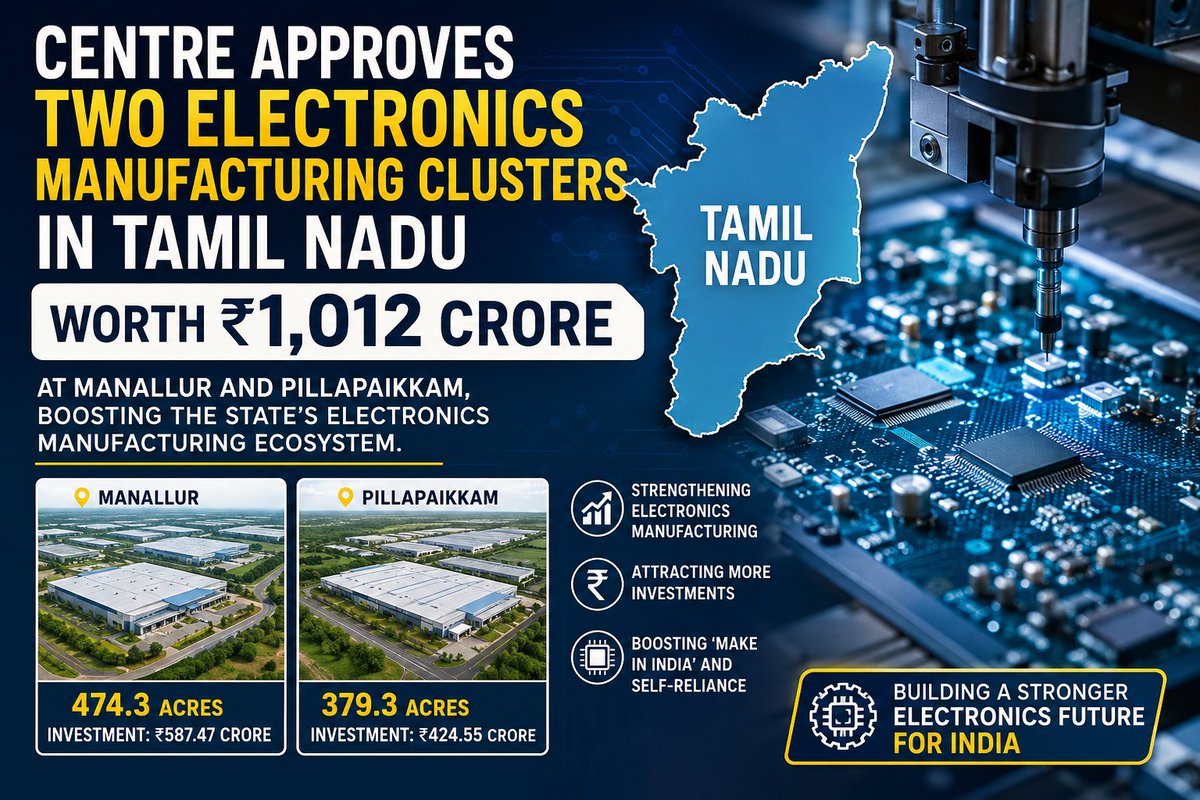
The approval of two Electronics Manufacturing Clusters goes beyond building new industrial infrastructure. It reflects India’s broader effort to enhance manufacturing competitiveness, strengthen domestic electronics production, and create a more resilient industrial ecosystem. The following strategic perspectives explore how this initiative supports business growth, investment, supply chains, industrial policy, regional development, and the country’s long-term technology ambitions.
Branding Angle: How Commercial Production Strengthens India’s Semiconductor Brand
Target Audience: Brand Strategists, Nation Branding Professionals, Corporate Communications Teams
Strategy: Explain the core strategic objective behind the announcement. Identify what the government, company, or organisation is trying to achieve and why.
Execution: Explain how the strategy is being implemented through relevant levers such as policy, infrastructure, technology, investment, partnerships, manufacturing, supply chains, communication, distribution, pricing, or product development. Only discuss the levers that are directly supported by the article.
Impact: The initiative strengthens India’s reputation as an emerging destination for electronics and semiconductor manufacturing. A stronger industrial ecosystem can improve global investor confidence, attract technology-driven businesses, support exports, and reinforce the country’s position in international manufacturing value chains.
Business Angle: How Electronics Manufacturing Clusters Strengthen India’s Manufacturing Ecosystem
Target Audience: Business Leaders, Manufacturing Executives, Industrial Strategists
Strategy: Explain how the government is building an integrated manufacturing ecosystem instead of supporting isolated factories. Show how the clusters are designed to improve scalability, operational efficiency, and long-term industrial growth.
Execution: Explain how shared industrial infrastructure, common facilities, modern logistics, and supportive government policy enable electronics manufacturers to establish operations faster, reduce infrastructure costs, and benefit from a connected manufacturing ecosystem.
Impact: The clusters create a more efficient manufacturing environment by enabling companies to scale operations, optimize resources, reduce operating costs, and improve collaboration across the industrial ecosystem. This strengthens India’s long-term manufacturing competitiveness.
Semiconductor Angle: How the New Electronics Manufacturing Clusters Accelerate India’s Semiconductor Ecosystem
Target Audience: Semiconductor Companies, Technology Leaders, Electronics Industry Professionals
Strategy: Explain how the approval supports India’s long-term objective of building a complete semiconductor ecosystem that combines design, manufacturing, skilled talent, and supporting infrastructure.
Execution: Explain how the Electronics Manufacturing Clusters complement the Semicon India Programme, strengthen Tamil Nadu’s semiconductor design ecosystem, and create stronger links between manufacturing infrastructure and engineering talent.
Impact: The initiative supports a more integrated semiconductor value chain by connecting talent, infrastructure, and manufacturing capabilities. Over time, this can attract global semiconductor companies, expand domestic production capacity, and reduce reliance on imported electronic components.
Target Audience: Manufacturing Executives, Plant Managers, Operations Professionals
Strategy: Explain how the government is improving manufacturing productivity by creating industrial clusters with shared infrastructure rather than developing standalone industrial facilities.
Execution: Explain how common utilities, industrial services, logistics infrastructure, and manufacturing support facilities allow companies to improve production efficiency, reduce setup time, and optimize operational resources.
Impact: Shared industrial infrastructure enables manufacturers to increase production capacity, streamline factory operations, reduce operational bottlenecks, and improve overall productivity, making India’s electronics manufacturing sector more competitive.
Investment Angle: How ₹1,012 Crore Strengthens India’s Electronics Manufacturing Investment Landscape
Target Audience: Investors, Financial Analysts, Infrastructure Developers
Strategy: Explain how strategic public investment is being used to encourage larger domestic and global investments in electronics manufacturing and semiconductor-related industries.
Execution: Explain how government funding for industrial infrastructure reduces investment barriers, improves project readiness, and creates a more attractive environment for private manufacturers and investors.
Impact: Government investment improves project readiness and creates a stronger foundation for private sector participation. This can encourage new manufacturing projects, increase investor confidence, and generate long-term industrial and economic value.
Supply Chain Angle: How the New Electronics Manufacturing Clusters Build a More Resilient Electronics Supply Chain
Target Audience: Supply Chain Professionals, Procurement Leaders, Manufacturing Consultants
Strategy: Explain how the government is strengthening domestic electronics supply chains by developing manufacturing clusters that improve supplier connectivity and logistics efficiency.
Execution: Explain how shared logistics infrastructure, supplier proximity, and integrated industrial facilities help manufacturers source components more efficiently, reduce transportation challenges, and improve coordination across the supply chain.
Impact: Better supplier connectivity and integrated industrial infrastructure improve manufacturing resilience, reduce logistics challenges, enhance component availability, and support more reliable production across the electronics sector.
Industrial Policy Angle: How the EMC Approval Advances India’s Long-Term Manufacturing Strategy
Target Audience: Policymakers, Government Officials, Industry Associations
Strategy: Explain how the approval supports India’s broader industrial policy of expanding domestic electronics manufacturing, strengthening semiconductor capabilities, and building globally competitive industrial ecosystems.
Execution: Explain how the Electronics Manufacturing Cluster Scheme, the Semicon India Programme, and government infrastructure investment work together to create a supportive policy environment for manufacturing growth.
Impact: A stable and supportive policy framework encourages long-term industrial investment, accelerates manufacturing expansion, strengthens business confidence, and enhances India’s standing as a competitive destination for electronics production.
Economic Development Angle: How the New Electronics Manufacturing Clusters Drive Jobs, Regional Growth, and Industrial Expansion
Target Audience: Economists, Development Professionals, Regional Planning Authorities
Strategy: Explain how industrial infrastructure investment is being used to stimulate regional economic development, employment generation, and long-term industrial growth.
Execution: Explain how the new manufacturing clusters attract businesses, create employment opportunities, strengthen local industrial activity, and support the growth of related industries across the region.
Impact: The new clusters will stimulate regional industrial activity, generate employment opportunities, support local businesses, and contribute to sustained economic development through higher manufacturing output and increased private investment.
Conclusion:
The approval of the new Electronics Manufacturing Clusters reinforces India’s long-term commitment to expanding domestic electronics manufacturing. By combining modern industrial infrastructure with supportive government initiatives, the projects create a stronger foundation for future industrial growth.
As development progresses, the Electronics Manufacturing Clusters are expected to encourage new manufacturing investments, improve industrial capacity, and strengthen India’s position as a globally competitive destination for electronics and semiconductor manufacturing.
Frequently Asked Questions
Q1. What are Electronics Manufacturing Clusters (EMCs)?
A. Electronics Manufacturing Clusters are dedicated industrial parks built for electronics manufacturers. They provide shared infrastructure, utilities, and logistics support, enabling companies to establish and expand operations more efficiently.
Q2. Why has the Centre approved new Electronics Manufacturing Clusters in Tamil Nadu?
A. The new clusters are designed to strengthen India’s electronics manufacturing capabilities by providing modern industrial infrastructure that supports semiconductor-related industries, attracts investment, and encourages long-term industrial growth.
Q3. What is the Semicon India Programme?
A. The Semicon India Programme is a Government of India initiative that promotes semiconductor design, manufacturing, and supporting infrastructure. Its objective is to build a stronger domestic semiconductor ecosystem and reduce dependence on imports.
Q4. Where are the new Electronics Manufacturing Clusters being developed?
A. The two new Electronics Manufacturing Clusters will be developed in Manallur and Pillapaikkam in Tamil Nadu. Together, they will provide advanced industrial infrastructure for electronics and semiconductor manufacturers.
Q5. How will the new Electronics Manufacturing Clusters benefit India’s economy?
A. The clusters are expected to encourage industrial investment, improve manufacturing productivity, strengthen domestic supply chains, create employment opportunities, and support India’s long-term growth as a global electronics manufacturing destination.
Thanks for reading! If you enjoyed this article, follow me on Beehiiv for practical insights on business strategy, branding, AI, digital marketing, manufacturing, and emerging technology trends.
Reply